ABOUT THE PROJECT
GENESPERSIVE is based at the Pyrenean Institute of Ecology. There, Dr. Blanca Jimeno has joined Dr. Jesús Martínez-Padilla´s group (who leads research on the main study population), and also remotely with Dr. Mark Ravinet´s lab at the University of Oslo (who provides training and expertise on bioinformatics and genomics).
The project´s main aim is to investigate the associations between epigenetic potential and natal dispersal across spatial and temporal scales, using the Pied Flycatcher (Ficedula hypoleuca) as a study species. The project merges ecology, behavioual biology, genomics and bioinformatics, covering both within- and among- population approaches (the latter thanks to the development of a collaborative international network).

What is epigenetic potential?
Epigenetic mechanisms are changes in gene expression that do not involve changes in the DNA sequence. They enable rapid and adaptive responses to the environment, via increased phenotypic plasticity. One of the most studied epigenetic mechanisms in the context of phenotypic plasticity is DNA methylation. DNA methylation influences the regulation of transcription and gene expression, leading to changes in phenotype. DNA methylation can be modified in response to various external cues, contributing to the ability of individuals to respond flexibly to environmental variation.
The “epigenetic potential” refers to the susceptibility of a genome (or genome sequence) to show epigenetic changes. In vertebrates, DNA methylation almost exclusively takes place in cytosines occuring before guanines (CpG sites). Changes in CpG content are thus extremely relevant for increasing or decreasing the potential for phenotypic plasticity via DNA methylation, as more CpG sites may represent more chances to adjust gene expression via DNA methylation. The number of CpG sites in a gene or genome thus represents a form of epigenetic potential, and may represent the range of phenotypic plasticity attainable by an individual, being a key determinant of successful settlement in novel areas.
Why dispersal?
Natal dispersal - the movement between the place of birth and first breeding - is a particularlyrelevant life history trait affecting most ecological and evolutionary processes determining individual fitness, and potentially scaling up into population dynamics, genetic structure and species distributions. Despite existing evidence that not all phenotypes are equally likely to disperse and establish in new areas, the mechanisms driving natal dispersal propensity remain poorly understood. Thus, investigating the causes of variation in dispersal phenotypes and the associated interaction between genes and the environment is crucial to predicting whether populations harbor adaptive potential for dispersal, as well as understanding the eco-evolutionary dynamics of this important trait.
if epigenetic potential represents the range of phenotypic plasticity achievable to an individual, it may be beneficial for dispersing individuals when coping with novel environments. Furthermore, because epigenetic potential should be a genetic, heritable trait, it may represent a link between genetic inheritance and epigenetic processes, enhancing its evolutionary impact.
Study system
(within-population scale)
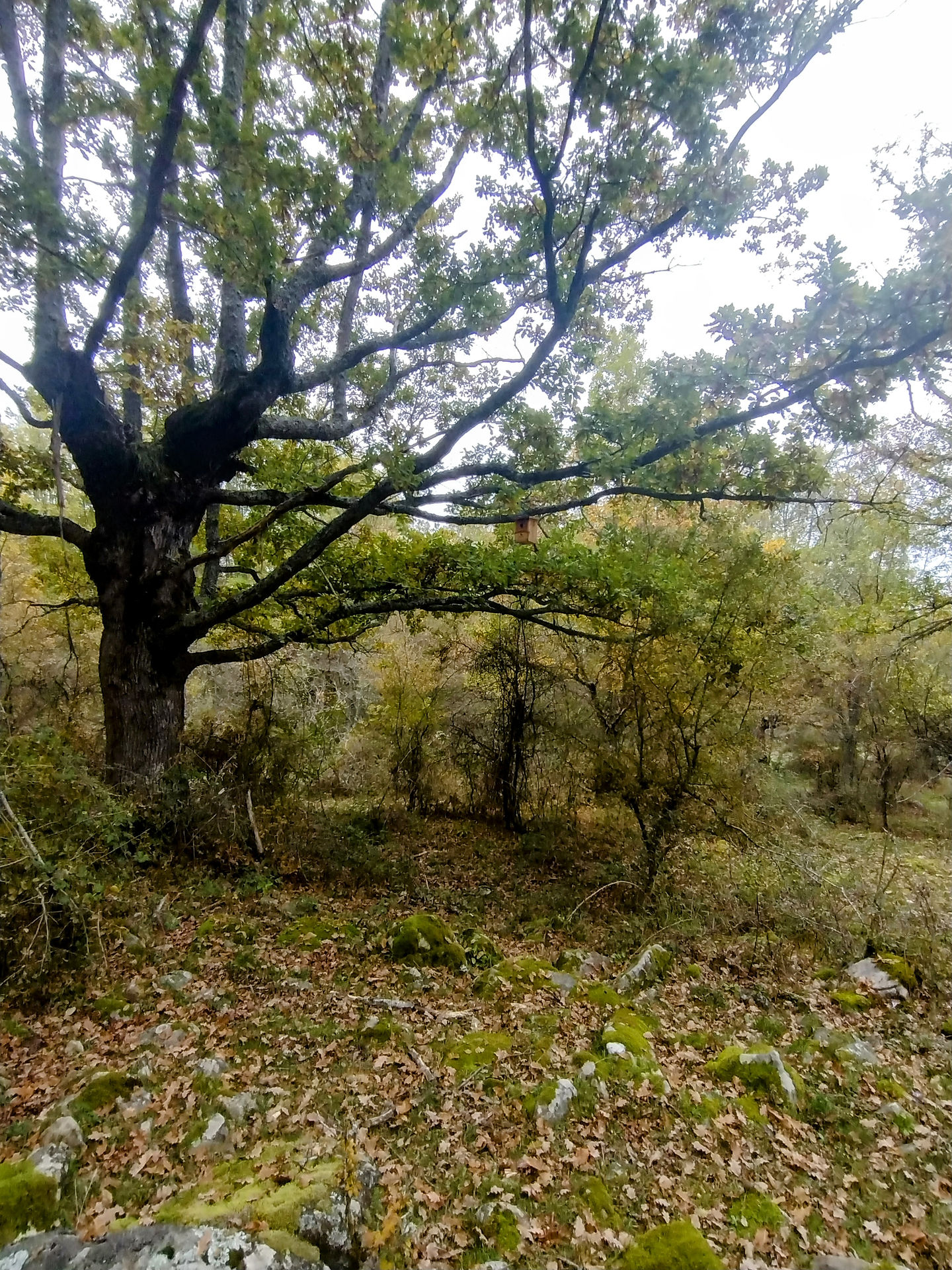
The main study system is a nest-box population of Pied flycatchers in central Spain, monitored since 1984. Every year all breeding adults and offspring are captured, identified with metal rings, and measured for standard morphological traits (body size, weight, sexual traits); life history traits are also quantified (laying date, clutch size, age at first reproduction, etc.). Local recruitment rates are among the highest reported on this species, and so natal dispersal patterns of a large number of individuals are known. GENESPERSIVE is using this dataset and a selection of historical blood samples to test for the association between natal dispersal propensity - leaving or not the natal patch - and epigenetic potential at 3 different scales.
Collaborative network (among-population scale)
GENESPERSIVE includes the creation of an international collaborative network which will make it possible to collect samples from Eurasian Pied flycatcher populations covering an expansion range. This collaboration currently involve 6 local research groups that will collect samples from 8 populations. We will then investigate the association between epigenetic potential and expansion status (stable/core, stable/edge, expansion) across populations.